
In our hyper-connected world, the ability to detect and amplify weak signals has become the cornerstone of reliable communication and advanced connectivity solutions.

🔍 Understanding the Landscape of Weak Signal Detection
Weak signal identification represents one of the most challenging yet critical aspects of modern communication systems. Whether you’re struggling with cellular reception in remote areas, attempting to establish satellite connections, or optimizing IoT networks, the capacity to recognize and utilize faint electromagnetic signals directly impacts communication quality and reliability.
The electromagnetic spectrum is crowded with countless signals competing for attention. Among this noise, valuable information often arrives at our devices as weak signals—transmissions that have traveled vast distances, penetrated through obstacles, or originated from low-power sources. Mastering the art and science of identifying these elusive signals opens unprecedented opportunities for connectivity.
Modern communication infrastructure depends heavily on sophisticated algorithms and hardware designed to extract meaningful data from signals that barely register above background noise. This capability isn’t merely technical luxury—it’s fundamental necessity for everything from emergency communications to autonomous vehicle networks.
📡 The Physics Behind Signal Weakness
Signal attenuation occurs through multiple mechanisms that engineers and technicians must understand thoroughly. Distance represents the most obvious factor, as radio waves naturally disperse energy as they propagate through space. This phenomenon, known as path loss, follows the inverse square law—doubling the distance reduces signal strength by approximately 75%.
Physical obstacles introduce additional complexity. Buildings, vegetation, terrain features, and even atmospheric conditions absorb, reflect, and scatter electromagnetic waves. Urban environments present particularly challenging scenarios where signals bounce off multiple surfaces, creating multipath interference that can strengthen or weaken reception depending on phase relationships.
Material composition dramatically affects signal penetration. Concrete and metal structures severely attenuate radio frequencies, while wood and glass offer relatively modest resistance. Understanding these characteristics allows strategic positioning of receivers and transmitters to maximize signal capture.
Environmental Variables Affecting Signal Strength
Weather conditions play surprising roles in signal propagation. Rain, fog, and humidity can absorb specific frequencies, particularly at higher bands like millimeter waves used in 5G networks. Temperature inversions can create atmospheric ducts that bounce signals far beyond their typical range, while solar activity introduces ionospheric disturbances affecting long-distance communications.
🛠️ Technologies Revolutionizing Weak Signal Processing
Modern receivers employ increasingly sophisticated techniques to extract usable information from barely perceptible signals. Software-defined radio (SDR) technology has democratized access to advanced signal processing, allowing flexible adaptation to various modulation schemes and frequency bands without hardware changes.
Digital signal processing algorithms perform near-miraculous transformations on weak signals. Techniques like matched filtering, correlation detection, and error correction coding enable receivers to reconstruct original messages even when noise levels exceed signal strength—scenarios where traditional analog systems would fail completely.
Antenna technology continues advancing with designs optimized for specific applications. Phased array antennas electronically steer their reception patterns toward signal sources while rejecting interference from other directions. MIMO (Multiple Input Multiple Output) systems use multiple antennas to capture signal components arriving via different paths, mathematically combining them for improved reliability.
Amplification Strategies That Actually Work
Low-noise amplifiers (LNAs) positioned immediately after antennas boost weak signals before they encounter additional noise sources within receiver circuitry. The quality of these amplifiers directly determines system sensitivity—the minimum signal level detectable above background noise.
Careful amplifier design balances gain against noise figure. Excessive amplification of already-noisy signals provides no benefit, while insufficient gain allows subsequent circuit stages to degrade signal-to-noise ratio. Cascaded amplifier stages require meticulous engineering to optimize overall system performance.
📱 Practical Applications in Mobile Connectivity
Smartphone manufacturers invest heavily in weak signal performance, recognizing that users frequently operate in challenging RF environments. Modern mobile devices incorporate multiple antennas, advanced modem chipsets, and intelligent network selection algorithms to maintain connectivity under marginal conditions.
Carrier aggregation technology allows devices to simultaneously connect across multiple frequency bands, combining throughput from each channel. When one frequency experiences poor propagation, others may perform better, providing resilience through diversity.
Wi-Fi calling and VoLTE (Voice over LTE) technologies leverage data connections to maintain voice communication when traditional cellular signals weaken. These systems adaptively adjust codec compression and error correction based on available bandwidth, prioritizing intelligibility over audio quality when necessary.
Network Intelligence and Adaptive Algorithms
Machine learning algorithms now optimize network performance by predicting signal conditions based on location, time, usage patterns, and historical data. These systems proactively adjust parameters like transmission power, modulation schemes, and handover thresholds to maintain optimal connectivity.
Beamforming technology in 5G networks directs focused signal beams toward individual users rather than broadcasting omnidirectionally. This approach dramatically improves signal strength at the receiver while reducing interference for other users—essentially creating virtual point-to-point links within shared spectrum.
🌐 Satellite Communications and Extreme Weak Signals
Satellite systems represent the ultimate challenge in weak signal detection. Signals transmitted from orbit travel thousands of kilometers through space, arriving at ground stations with power levels measured in femtowatts—quintillionths of a watt. Detecting these whisper-faint transmissions requires extraordinary engineering.
Large parabolic dishes concentrate signals from specific directions, effectively increasing antenna gain. The larger the dish, the more signal energy collected and the narrower the reception pattern, rejecting interference from other directions. Professional satellite ground stations use dishes measuring meters across, while consumer systems balance size constraints against performance requirements.
Cryogenic cooling of critical receiver components reduces thermal noise that would otherwise mask weak signals. Research-grade systems cool amplifiers to near absolute zero using liquid helium, though commercial applications typically employ less extreme measures with proportionally reduced but still substantial benefits.
Deep Space Network Innovations
NASA’s Deep Space Network communicates with spacecraft billions of kilometers away, receiving signals so weak they wouldn’t power a digital watch for a nanosecond. These systems employ massive 70-meter dishes, hydrogen maser atomic clocks for timing precision, and signal processing that integrates received energy over extended periods to extract data from apparent noise.
Coding techniques like Turbo codes and Low-Density Parity-Check codes approach theoretical limits of information transmission, adding redundancy that allows reconstruction of messages despite high error rates. These mathematical frameworks represent some of humanity’s most elegant solutions to practical communication challenges.
💡 IoT Networks and Low-Power Signal Optimization
Internet of Things deployments face unique weak signal challenges. Battery-powered sensors must minimize transmission power to extend operational lifetime, resulting in inherently weak signals that infrastructure must reliably detect across potentially vast areas.
LoRaWAN (Long Range Wide Area Network) technology specifically addresses this scenario, using chirp spread spectrum modulation that trades data rate for range and sensitivity. Single gateways can receive signals from devices tens of kilometers away transmitting mere milliwatts of power.
Narrowband IoT (NB-IoT) utilizes existing cellular infrastructure with modifications that improve sensitivity by 20dB compared to traditional mobile communications. This enhancement extends battery life to years while maintaining connectivity in challenging environments like underground utility meters or remote agricultural sensors.
🔬 Measurement Techniques and Diagnostic Tools
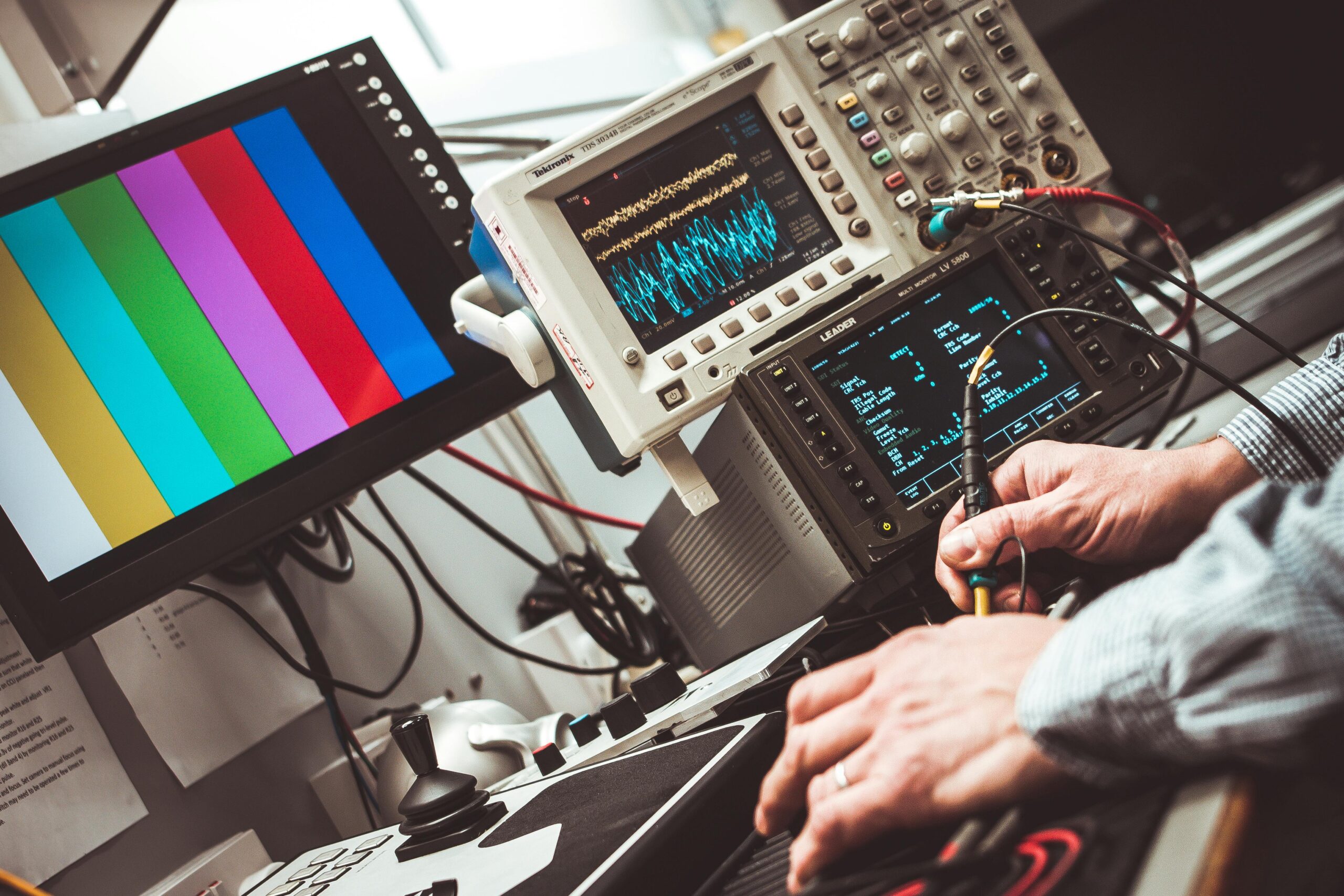
Effective weak signal identification begins with accurate measurement. Spectrum analyzers display signal strength across frequency ranges, revealing not only desired signals but also interference sources that may impede reception. Modern analyzers incorporate signal demodulation, allowing detailed examination of transmission characteristics.
Field strength meters provide portable measurement capabilities for site surveys and installation optimization. These devices help technicians position antennas for maximum signal capture and identify physical obstacles causing attenuation.
Software applications transform smartphones into surprisingly capable signal analysis tools, displaying cellular network parameters, Wi-Fi channel conditions, and GPS satellite visibility. While less precise than professional equipment, these accessible tools democratize signal optimization for everyday users.
Interpreting Signal Metrics Correctly
Understanding measurement units prevents misinterpretation. Signal strength typically appears in dBm (decibels relative to one milliwatt), where values closer to zero indicate stronger signals. A reading of -70 dBm represents excellent cellular reception, while -110 dBm approaches the minimum usable level for most systems.
Signal-to-noise ratio (SNR) matters more than absolute signal strength for data transmission quality. High signal strength with proportionally high noise provides worse performance than moderate signal strength with low noise. Quality metrics like SINR (Signal-to-Interference-plus-Noise Ratio) capture this relationship comprehensively.
🚀 Emerging Technologies Pushing Boundaries
Quantum communication systems promise revolutionary advances in weak signal detection through quantum entanglement and superposition principles. Though largely experimental, these technologies demonstrate sensitivities impossible with classical physics, detecting individual photons reliably.
Reconfigurable intelligent surfaces (RIS) represent exciting developments in controlling signal propagation. These electronically adjustable panels mounted on buildings redirect wireless signals around obstacles, effectively creating favorable propagation paths where none existed naturally.
Terahertz communications explore frequencies between microwave and infrared bands, offering enormous bandwidth potential. However, atmospheric absorption challenges require sophisticated weak signal handling techniques to realize practical systems.
🎯 Strategic Implementation for Maximum Performance
Successful weak signal identification requires systematic approaches combining technology selection, careful installation, and ongoing optimization. Begin by thoroughly surveying the operational environment, mapping signal strengths and identifying problematic areas requiring attention.
Antenna placement dramatically affects performance. Elevation provides significant advantages, reducing obstacles between antennas and signal sources. Even modest height increases of a few meters can transform unusable signals into reliable connections.
Proper cable selection and connection integrity prevent unnecessary losses. Low-quality coaxial cables introduce substantial attenuation, particularly at higher frequencies. Weatherproofing connections prevents moisture ingress that degrades performance over time.
Optimization Through Iterative Testing
Systematic testing validates configuration changes. Adjust one variable at a time—antenna orientation, position, amplifier gain—while measuring results. Document findings to build institutional knowledge for future deployments.
Network planning tools simulate coverage using terrain databases, building footprints, and propagation models. While imperfect, these predictions guide initial deployments and identify locations requiring special attention or supplementary infrastructure.
🌟 Future Horizons in Connectivity Excellence
Artificial intelligence integration promises autonomous optimization of communication systems, continuously adapting to changing conditions without human intervention. Neural networks trained on vast datasets of signal behavior patterns recognize optimal configurations faster than traditional approaches.
6G research already explores frequencies and technologies beyond current 5G deployments, addressing weak signal challenges inherent in millimeter and terahertz bands. Integrated sensing and communication systems will simultaneously transmit data and map environments, using signal reflections for positioning and obstacle detection.
The convergence of terrestrial and satellite networks creates seamless connectivity regardless of location. Low Earth orbit constellations complement ground infrastructure, providing backup connectivity and serving areas where terrestrial deployment proves economically unfeasible.
Mastering weak signal identification transcends technical achievement—it represents our commitment to universal connectivity, ensuring communication reliability regardless of environmental challenges. As we push technological boundaries, the principles of careful measurement, strategic optimization, and continuous innovation remain fundamental to success.
The invisible electromagnetic waves carrying our communications may weaken through distance and obstacles, but human ingenuity strengthens our ability to detect, process, and utilize them. This ongoing journey toward perfect connectivity drives innovation across industries, improving lives through communication that works when and where it matters most.